
Shopping Cart
How to keep your baby warm in the carrycot in winter: footmuff, cover and sheets
11/03/2026 23:39:43 , Maternity and Parenthood
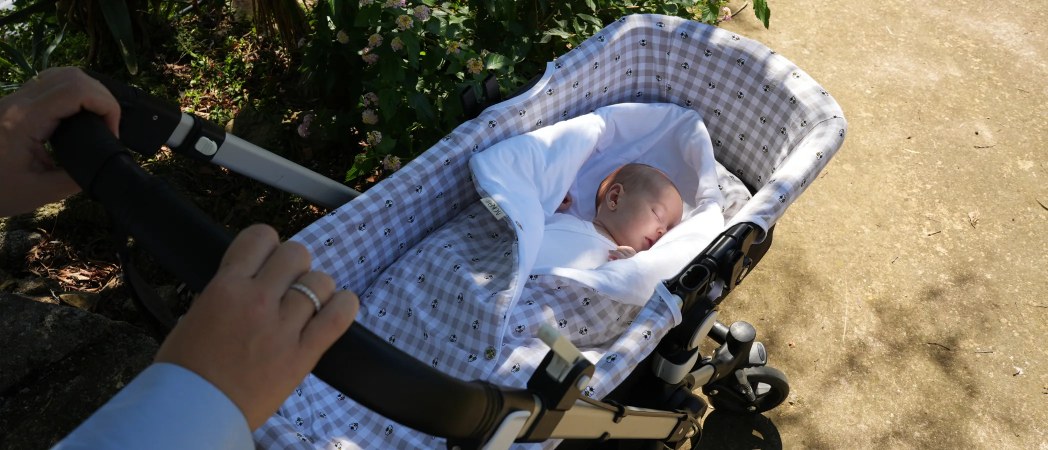
When the cold weather arrives, so do the usual questions: how many layers should I put on? Should I cover them with a blanket? What if they get cold on the walk… or too hot when we go into a shop? In the carrycot, your baby also lies flat and still, so they don't generate heat by moving around the way an older child does.
In this guide we explain how to keep your baby warm in the carrycot in winter, step by step: what to dress them in, why a footmuff is a better idea than a loose blanket, how to prepare the inside of the carrycot and how to tell whether your baby is too cold or too hot.
The basic rule: one more layer than you
The NHS (the UK's public health service) keeps it simple: dress your baby in one more layer of clothing than you are wearing. If you're in a T-shirt and a jumper, your baby can wear a bodysuit, a sleepsuit and a cardigan or jumper. From there, what keeps them warm on the walk is the carrycot footmuff.
- Layer 1: a long-sleeved cotton bodysuit.
- Layer 2: an all-in-one sleepsuit or babygrow, ideally with feet.
- Layer 3: a jumper or a thin knitted cardigan.
- On top: the carrycot footmuff, plus a hat and mittens for going outside.
Several thin layers keep your baby warmer than one very thick one and, above all, you can take them off one at a time when the temperature changes.
Carrycot footmuff or blanket: why the footmuff wins
In the carrycot, a blanket has two problems: babies kick it off easily and, as they move, it can ride up towards their face. That's why safe-sleep guidance insists that there should be no loose bedding in the space where a baby sleeps. If you do use a blanket, it should be firmly tucked in and come no higher than your baby's collarbones.
A carrycot footmuff solves both problems: your baby is snug inside, can't kick it off and there's nothing loose that could cover their face. And there's no need to add a blanket on top: the same guidance advises against combining a footmuff and a blanket.
Choose the fabric according to the season:
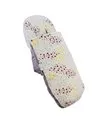
- In the depths of winter, a polar fleece footmuff. Our polar footmuff for carrycots is universal and made with OEKO-TEX certified fabrics. You'll find all our designs in winter carrycot footmuffs.
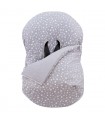
- In autumn and spring, or on mild days, a cotton footmuff: our cotton footmuff for carrycots protects against cold and wind without being too warm. More options in mid-season carrycot footmuffs.
Prepare the inside of the carrycot
A snug fitted sheet
Whatever is under your baby needs to be smooth and held firmly in place: a firm, flat mattress and a fitted sheet in exactly the right size, with no wrinkles or loose parts. Our carrycot fitted sheet measures 75 x 35 cm and has elasticated edges, so it goes on and comes off in seconds and adapts to carrycots of similar sizes. If you have a Stokke, there's a dedicated fitted sheet for Stokke carrycots. It's made of breathable cotton knit, which is exactly what you want in winter: the warmth should come from the clothes and the footmuff, not from a mattress that traps moisture.
A cover that gives the carrycot a new lease of life
If the carrycot has already been used by an older sibling or looks worn, a carrycot cover makes it feel like new. Ours is made of soft organic cotton, handmade, and makes walks more comfortable. For the Stokke Xplory there's the carrycot cover for Stokke Xplory. And in our sheets and blankets category you'll find all the textiles for the carrycot.
How to tell if your baby is too cold or too hot
Don't go by their hands or feet: it's normal for babies' hands and feet to feel cool even when they're fine. What you need to check is their chest or the back of their neck.
- Back of the neck or chest warm and dry: they're fine.
- Sweaty, damp or with a very hot tummy: they're too hot. Take off a layer or open the footmuff.
- Chest cool to the touch: add a layer.
If in doubt, slightly cool is better than too wrapped up: safe-sleep guidance reminds us that overheating is a risk for babies.
Take care when you go indoors
The most common winter mistake isn't the cold on the walk, it's the heat afterwards. The NHS recommends removing your baby's hat and extra layers as soon as you go somewhere heated or get into a warm car, bus or train, even if it means waking them. In the carrycot, that means:
- Taking off their hat.
- Opening or folding down the footmuff.
- If you're staying a while, taking off a layer.
And never cover the whole carrycot with a blanket or a muslin: the air gets trapped inside and your baby can overheat.
If your baby sleeps at home
If your baby sleeps in the carrycot indoors, the room should be between 16 and 20 °C. No hat (it isn't needed indoors), no hot-water bottles, and keep the carrycot away from radiators and heaters. The safest position is on their back, on a firm, flat surface with nothing loose around them.
Quick checklist before you head out
- Bodysuit, sleepsuit and a thin jumper.
- Polar footmuff for the carrycot (or a cotton one if it isn't very cold).
- Hat and mittens for outdoors.
- A snug fitted sheet and nothing loose inside the carrycot.
- When you go somewhere warm: hat off and footmuff open.
Frequently asked questions
Can I put a blanket on top of the footmuff?
There's no need and it isn't recommended: if it's colder, it's better to add a layer of clothing or use a warmer footmuff than to add a blanket.
Which carrycot footmuff should I choose, polar fleece or cotton?
Polar fleece for the cold months; cotton for autumn, spring or mild days. If you live somewhere with mild winters, a cotton footmuff may be enough for much of the year.
What size sheet does my carrycot need?
Measure your carrycot mattress. Our fitted sheet measures 75 x 35 cm and its elasticated edges adapt to similar sizes. If you have a Stokke carrycot, choose the dedicated version.
Does my baby need a hat in the carrycot?
Outdoors, yes. At home or in a heated shop, no: take it off as soon as you go in.
In summary
To keep your baby warm in the carrycot in winter: one more layer than you, a footmuff instead of a loose blanket, a snug fitted sheet and nothing loose around them. Check their temperature on the back of the neck or the chest, not the hands, and take off the extra layers as soon as you go somewhere warm.
Sources: NHS, “How to dress a newborn”; winter safe-sleep advice from NHS South Yorkshire and Manchester City Council, based on The Lullaby Trust guidance.