

Shopping Cart
Car seat, stroller and carrycot reducers: what they are for and when to remove them
11/04/2026 21:28:49 , Child development

Car seats, strollers and carrycots are designed to grow with your baby for many months. That is why, when you bring a newborn home, the seat usually looks huge: the baby "floats" inside, slides down, their head tips to one side and their body has nothing to rest against.
That is what a reducer is for. In this guide we explain what it does, how each piece works, how it adapts as your baby grows and when to start removing it, in the car seat, the stroller and the carrycot.
What is a reducer for?
A reducer is a padded cushion that fills the extra space around the baby inside the seat. It has three main jobs:
- Keeping the baby snug: it fills the gaps at the sides so the baby stays tucked in and does not shift with every bend or bump.
- Raising and positioning: a small newborn sinks to the bottom of the seat. By raising them, the reducer makes the harness and the crotch buckle sit at the right height on their body instead of above it.
- Supporting the head: in the first months babies cannot yet control their neck, so they benefit from support that keeps the head straight and still.
The three pieces of the reducer and what each one does
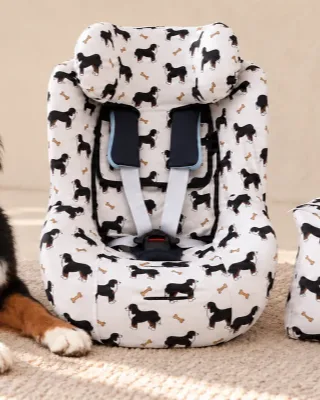
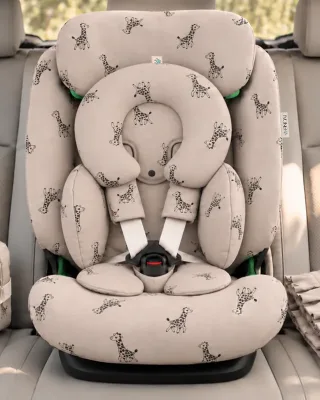
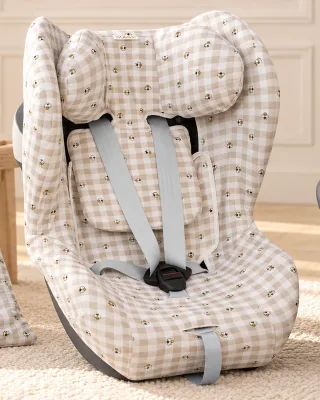
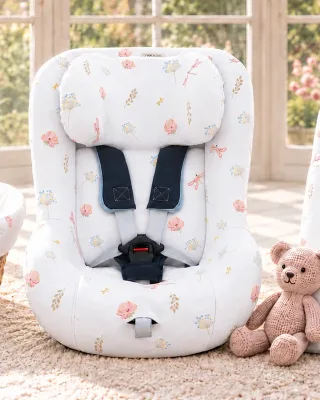
Our 3-piece universal reducer cushion is designed to support the baby from birth. Each piece has its own job:
- Back: the most important piece when the baby is very small. It raises the bottom so the baby does not sink into the seat and the crotch buckle holds them where it should.
- Head: it surrounds the head at the sides so it stays straight and does not fall sideways when the baby falls asleep.
- Body: it runs along the shoulders and sides so the body stays tucked in.
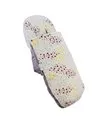
Two of the pieces attach with Velcro, and the seat harness goes over the top, just as it would without a reducer. If your seat already fills the back well, there is also a 2-piece version (head and body), and the back support cushion is sold separately too.
How it adapts as your baby grows
A reducer is not removed all at once: you take pieces out as your baby grows and fills more of the seat. This is the usual order:
- First, the back. Once the baby fills the seat and no longer sinks, the back filler is no longer needed.
- Then, the head. Once the baby holds their head well, and especially if the seat has its own adjustable headrest, you can remove the head piece.
- Finally, the body. This is the piece that lasts longest. Remove it when the shoulders no longer fit comfortably or when you notice the reducer feels tight.
Our reducers are designed for babies from 0 to 12 months, although every baby grows at their own pace: what matters is how they fit in their seat, not their exact age.
Why a cotton reducer?
A newborn's skin is much thinner and more sensitive than an adult's, and in the car seat it spends a long time in contact with the reducer. That is why the fabric matters:
- Cotton breathes and does not trap heat and sweat the way polyester does, so the baby stays cooler and the skin is less easily irritated.
- Our reducers are made of 100% cotton, with fabrics certified to OEKO-TEX Standard 100, suitable for children.
- They are handmade in Barcelona, machine washable at 30 °C and can be personalised with the baby's name.
Reducer for the stroller
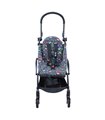
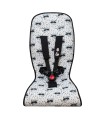
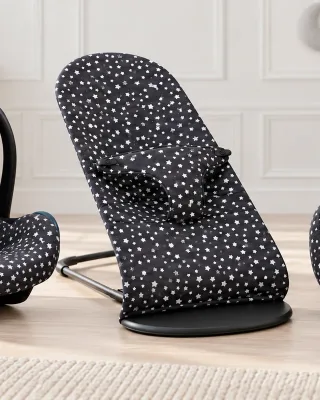
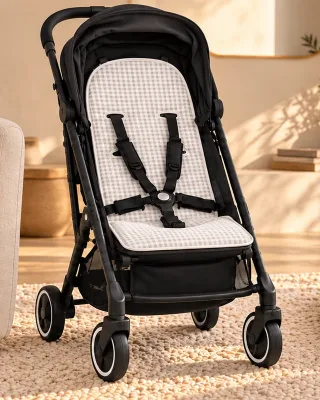
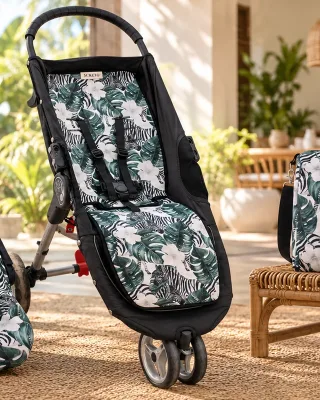
When your baby moves on to sitting up in the stroller, they still appreciate being snugly supported. The universal reducer cushion for strollers is made of 100% organic cotton certified to OEKO-TEX and has openings for the straps. Its upper cushions support the head as the stroller sways, and its padding softens bumps in the pavement. It is also reversible and protects the stroller upholstery from wear.
You will find every model in stroller reducers.
Reducer for the carrycot
In the carrycot the baby lies flat, so the back filler is not needed: what the reducer offers here is stability, keeping the baby tucked in during walks instead of sliding from side to side, and stopping the head from rolling. That is why the 2-piece reducer (head and body) is the one to use in the carrycot. You will find it in carrycot reducers.
If you also want to know how to get the carrycot ready for the cold, we explain it in how to keep your baby warm in the carrycot in winter.
How to fit the reducer correctly
- Place the pieces in the seat with the baby out of it: the back piece at the bottom first, then the body and head pieces.
- Sit the baby against the reducer, with a straight back and their bottom well back in the seat.
- Bring the harness over the top and buckle it as usual. Tighten it until it is firm with no slack over the shoulders, and check that the crotch buckle is in place.
- Always follow your seat's manual for the harness height and headrest position.
In winter, it is also best not to put thick coats under the harness. We explain how to keep your baby warm in a winter coat in the car seat?
Does your seat come with its own reducer?
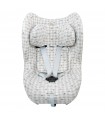
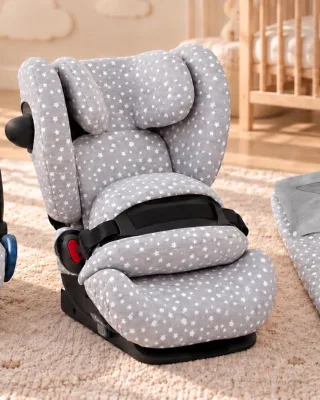
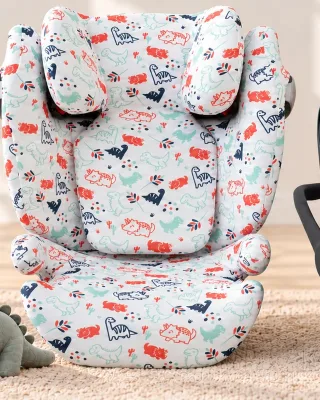
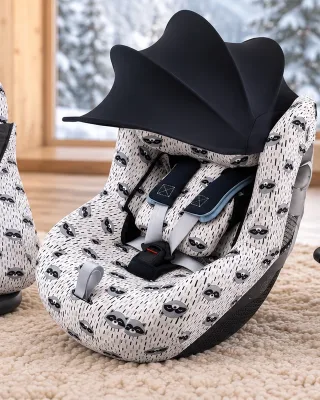
Many group 0+ and i-Size car seats include a reducer as standard. In that case you can keep using it and dress it with a cotton reducer cover: the seat looks like new, your baby rests against a soft fabric and the cover comes off for washing without taking the seat apart. We have covers for the reducers of models such as the Joie i-Spin 360, the Maxi-Cosi Pebble 360 and the Doona, and many more in car seat reducers.
Frequently asked questions
From when can I use a reducer?
From birth. It makes the biggest difference in the first weeks, because that is when the seat is largest for the baby.
Until when is it used?
Our reducers are designed for 0 to 12 months, but the pieces come out one by one: first the back, then the head and finally the body, as your baby fills the seat.
Does it fit any seat?
Universal reducers fit most car seats, carrycots and strollers. If your seat comes with its own reducer, the most practical option is a cover made to measure for it.
How do I wash it?
In the washing machine at 30 °C on a gentle cycle, without bleach or similar chemicals.
In short
A newborn needs to be tucked in, raised and have their head well supported, and the reducer is what makes a seat designed for months of use fit them from day one. Choose a cotton one, remove the pieces as your baby grows and always tighten the harness properly.