



















Shopping Cart
Infant colic: what it is, how to soothe it and when to see a doctor
02/05/2019 15:01:19 Health

Your baby is fine during the day, but as evening falls they start crying inconsolably, pull their legs up, clench their fists and go red in the face. You try everything and nothing seems to work. It is probably infant colic, one of the most common reasons parents see the paediatrician in the first months. In this guide we explain what it is, what you can do to soothe it and when to see your paediatrician.
What is infant colic?
Colic means episodes of intense, prolonged crying with no apparent cause in a baby who is healthy and feeding well. The crying starts and stops suddenly, is high-pitched and very hard to soothe. During an episode the baby usually:
- Pulls their legs up towards their tummy.
- Clenches their fists and tenses up.
- Goes red in the face.
Between episodes, the baby is calm again and looks normal.
When does it start and how long does it last?
It usually starts at around 15 days old, is most intense at about 5 or 6 weeks and almost always disappears by around 4 months. Episodes are more frequent in the late afternoon and evening, and can last from a few minutes to several hours.
Bear in mind that it is normal for a healthy baby to cry for two hours or more a day in total, even without colic.
What causes it?
The exact cause is not known. Several factors are considered: an immature gut, changes in gut flora, greater sensitivity to stimulation, tiredness and changes in routine. In a small number of cases, cow's milk protein allergy may play a part; if you suspect it, talk to your paediatrician.
What matters is knowing that colic is harmless: it goes away on its own and leaves no after-effects.
How to soothe a colicky baby
There is no treatment with proven effectiveness, but some things help many babies:
- Rule out the basics: that they are not hungry, too cold or too hot, and their nappy is clean.
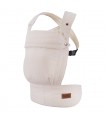
- Hold them in your arms and find the position in which they are calmest. Being close to you soothes them; an ergonomic baby carrier lets you keep them close and have your hands free.
- Gentle movement: rocking them, walking with them in your arms or going for a walk with the pushchair. If it is cold out, a pushchair footmuff keeps them warm.
- A gentle massage on their tummy or back.
- A calm environment: dim lighting, little noise and few stimuli.
- Some babies calm down wrapped in a light blanket; others prefer to be free. See what works for yours.
- After feeds, keep them upright for a while to help them bring up wind. We explain how in how to burp a baby.
Feeding: does anything need to change?
Colic is slightly less common in breastfed babies. If you breastfeed, let your baby empty one breast well before offering the other: the milk at the end of the feed is richer in fat and more filling.
In some cases a special formula helps or, if breastfeeding, removing dairy from the mother's diet, but do not make any change without checking with your paediatrician first. There is no need to cut out foods on your own.
What not to do
- Do not give herbal teas, herbs or home remedies. They work about as well as a placebo, and some plants, such as star anise, can cause serious poisoning.
- Do not give medicines or pharmacy products unless your paediatrician recommends them. Some probiotics seem to help certain babies, but how well they work is still unclear.
- Never shake a baby. If you feel you cannot cope, lay them on their back in their cot with nothing loose around them, leave the room for a moment to calm down and ask for help.
When to see the paediatrician
Your paediatrician can confirm that it is colic and rule out other causes. Seek medical advice straight away if your baby:
- Has a fever.
- Vomits, refuses feeds or is not gaining weight.
- Has blood in their stools.
- Is pale, sweaty or listless.
- Does not return to normal between episodes, or nothing will calm them.
Look after yourself too
Colic is exhausting. Take turns to rest, ask family or friends for help and remember it is a passing stage. For more ideas on calming a very young baby, read how to calm a baby aged 0 to 3 months.
Frequently asked questions
Is colic caused by wind?
Nobody knows for sure. Wind and an immature gut may play a part, but so may other factors. Helping them bring up wind after feeds may ease their discomfort.
When does colic stop?
It almost always disappears by around 4 months of age.
Is there a remedy that works?
There is no treatment with proven effectiveness. What helps most is comforting them, closeness, gentle movement and a calm environment. Do not give them any product without checking with your paediatrician.
In short
Infant colic is common, harmless and temporary. Hold your baby, rock them, take them out for a walk and keep things calm; do not give remedies without asking your paediatrician, never shake them, and seek advice if any warning sign appears.
This article is for information only and does not replace your paediatrician's assessment.